
All services
Safety
Radon Mitigation
A system designed around the home, installed to reduce radon entry.
A typical active soil-depressurization system uses sealed pathways and PVC piping to draw soil gas from beneath the foundation and discharge it above the roof. The fan belongs outside the conditioned and occupiable space—never in a basement, crawlspace, or finished room.
- Home-specific suction and routing plan
- Discreet piping with the fan outside the living space
- System indicator, labeling, and post-installation testing
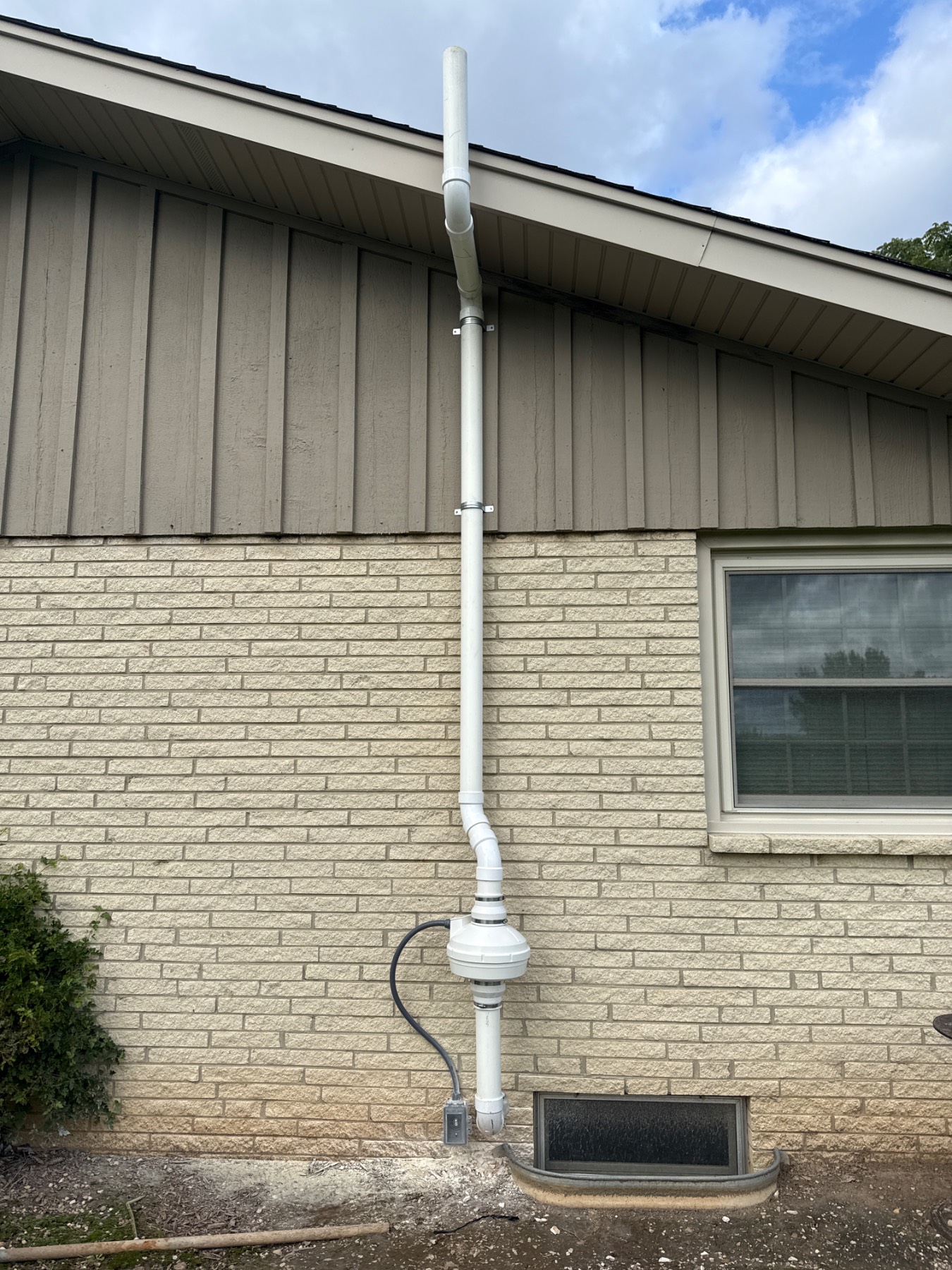
Two ways to route the system
Routed up the outside, or through the inside.
Most systems run the pipe up an outside wall. Some route through a garage, closet or utility area and out the roof. Either way, the fan stays outside the living space.
A clearer service promise
Designing the Right Radon System for Every Home
The process
From first question to finished work.
Evaluate the foundation
Plan the least-intrusive route
Install, seal, and place the fan correctly
Retest and explain the system
Useful answers
Questions before the quote.
Is every system the same?
No. The foundation, the layout, access, and the measured radon level all shape the design of your system.
Where does the radon fan go?
Outside the living space — on an outside wall, in the attic, or in a suitable garage space. Piping can run inside the house, but the fan is never installed in a basement, crawlspace or finished room.
How long does installation take?
Most systems are installed in one visit. If your home needs more time, we tell you when we plan the work.
Will I hear the system?
The fan runs all the time, but because it sits outside the living space most homeowners rarely notice it.
How do I know it’s working?
Every system has an indicator you can glance at to see that it is running, and a test after installation confirms the level came down.
Should I test again later?
Yes. The EPA recommends testing again at least every two years, and after major renovations or changes to the house.
Certified, licensed & registered
- National Radon Proficiency ProgramCertified radon professionals
- American Association of Radon Scientists and TechnologistsMember
- Minnesota Department of HealthLicensed radon company
- Illinois Emergency Management AgencyLicensed radon company
- Better Business BureauAccredited Business
Licensed & registered
- Minnesota Department of Health — Radon Mitigation Company License #RCO-00060 · Lifetime Home Services LLC
- Minnesota Department of Health — Radon Mitigation Company License #RCO-00021 · Lifetime Radon Solutions Inc
Financing options
Discuss the scope before choosing a payment path.
Financing is subject to approval and availability. Review the current provider, rates, terms, and disclosures before applying.
Review financingLocal service
Confirm the project address and service route.
Use the location guide or enter the ZIP in the quote path so the right local context travels with the request.
Choose a locationA clear next step
Have a project in mind?
Choose the service and location, or call the team with the project context in front of you.